
The Beginner's Guide to Making Fresh Pasta
Learn how to make fresh pasta from scratch with this step-by-step guide. Impress your friends and family!
Hook Intro
Have you ever tasted warm, pillowy fresh pasta, and thought, "I could never make that!"? Well, surprising as it may be, making fresh pasta at home is easier than you think! With just a few simple ingredients and some hands-on time, you can create a culinary masterpiece that will impress your friends and family. Let’s dive into the world of pasta-making and find out how you can whip up this delightful dish right in your kitchen.Quick Answer
TL;DR: Making fresh pasta is a straightforward process involving just flour, eggs, and a bit of elbow grease. Follow the steps below to create your own pasta dough and cook it to perfection!
Why This Matters
Making fresh pasta at home not only allows you to control the ingredients but also gives you the joy of crafting something delicious from scratch. Unlike store-bought pasta, which can often be dry and bland, fresh pasta has a soft texture and rich flavor that can elevate any dish. Plus, the satisfaction of rolling out your own dough and shaping it into beautiful forms is unmatched! Imagine the aroma of boiling pasta wafting through your kitchen, paired with a fresh sauce of your choice. It’s a meal that’s sure to warm your heart and impress your guests.Step-by-Step Guide
Gather Your Ingredients
Start with the basics: 2 cups of all-purpose flour, 3 large eggs, and a pinch of salt. This simple combination is the foundation of your fresh pasta.Make the Dough
On a clean surface, make a mound with your flour. Create a well in the center and crack the eggs into it. Add the salt and, using a fork, whisk the eggs while gradually incorporating the flour from the edges. This should take about 5 minutes.Knead the Dough
Once the mixture starts to come together, use your hands to knead the dough. Knead for about 8-10 minutes until it becomes smooth and elastic. You’ll know it’s ready when it feels like a soft pillow under your fingers.Let It Rest
Wrap the dough in plastic wrap and let it rest for 30 minutes at room temperature. This helps the gluten relax, making it easier to roll out.Roll Out the Dough
After resting, divide the dough into four pieces. Flatten one piece slightly and dust it with flour. Using a rolling pin or a pasta machine, roll it out to your desired thickness. Aim for about 1/16 inch for fettuccine or lasagna.Cut the Pasta
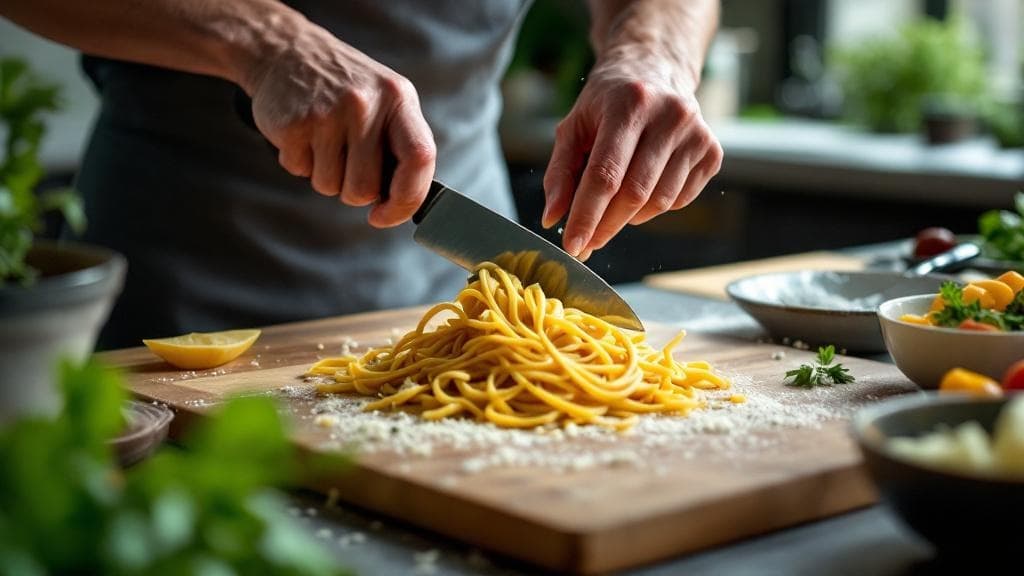
Once rolled out, dust the surface with more flour and fold the sheet gently. Use a sharp knife or a pizza cutter to cut it into your desired shape, whether it’s tagliatelle, pappardelle, or sheets for lasagna.Cook the Pasta
Bring a large pot of salted water to a boil. Add your freshly cut pasta and cook for 2-4 minutes. Fresh pasta cooks much faster than dried, so keep an eye on it!Drain and Serve
Once the pasta is al dente, drain it and toss it with your favorite sauce. The possibilities are endless here: a simple olive oil and garlic sauce, a rich marinara, or a creamy Alfredo.Enjoy!
Serve your fresh pasta with a sprinkle of Parmesan cheese and a drizzle of olive oil. Take a moment to savor the aroma and appreciate your hard work!
Quick Reference Guide
| Item | Time/Amount | Signs of Success |
|---|---|---|
| Flour | 2 cups | Soft, pliable dough |
| Eggs | 3 large | Bright, cohesive mixture |
| Kneading | 8-10 minutes | Smooth and elastic texture |
| Resting | 30 minutes | Dough is softer and easier to roll |
Common Mistakes to Avoid
Mistake: Using too much flour. This can lead to dry dough, which is difficult to work with. Fix: Start with less flour and add more only if necessary.
Mistake: Not kneading enough. Under-kneaded dough can result in chewy pasta. Fix: Aim for a smooth, elastic consistency by kneading thoroughly.
Mistake: Overcooking the pasta. Fresh pasta cooks quickly and can turn mushy if overdone. Fix: Taste-test a piece after 2 minutes in boiling water.
Mistake: Skipping the resting time. This can make the dough hard to roll out. Fix: Always let the dough rest for at least 30 minutes.
Extra Tips
- Store any unused pasta in a floured container, and it will keep for a day or two.
- Experiment with different flours like semolina for a different texture.
- If you're short on time, you can use a pasta machine to speed up the rolling process.
Pro Tips
Pro Tip: For a touch of flavor, try adding herbs like basil or spinach to your dough for colorful, flavorful pasta.
Pro Tip: Make a large batch and freeze the extra pasta. Just make sure to separate the pieces with parchment paper.
Pro Tip: When cooking fresh pasta, remember that it can absorb a lot of sauce, so don’t be shy with your toppings!
